Menu

Menu
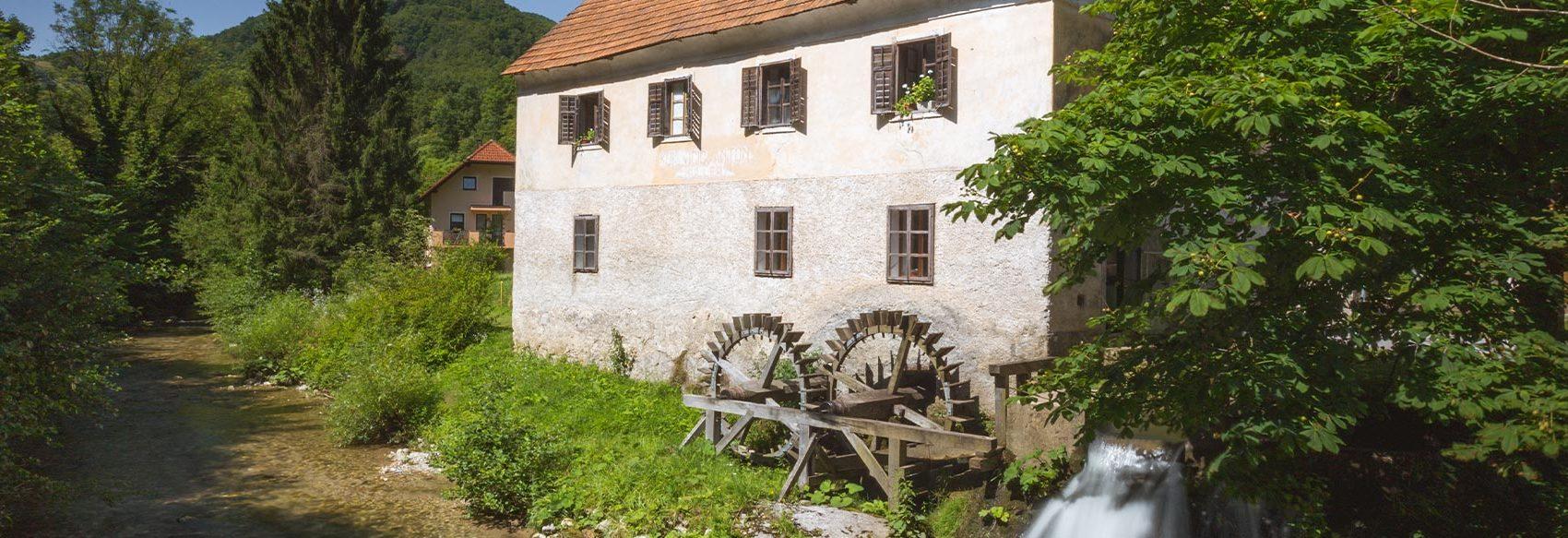
Kukovičič mill
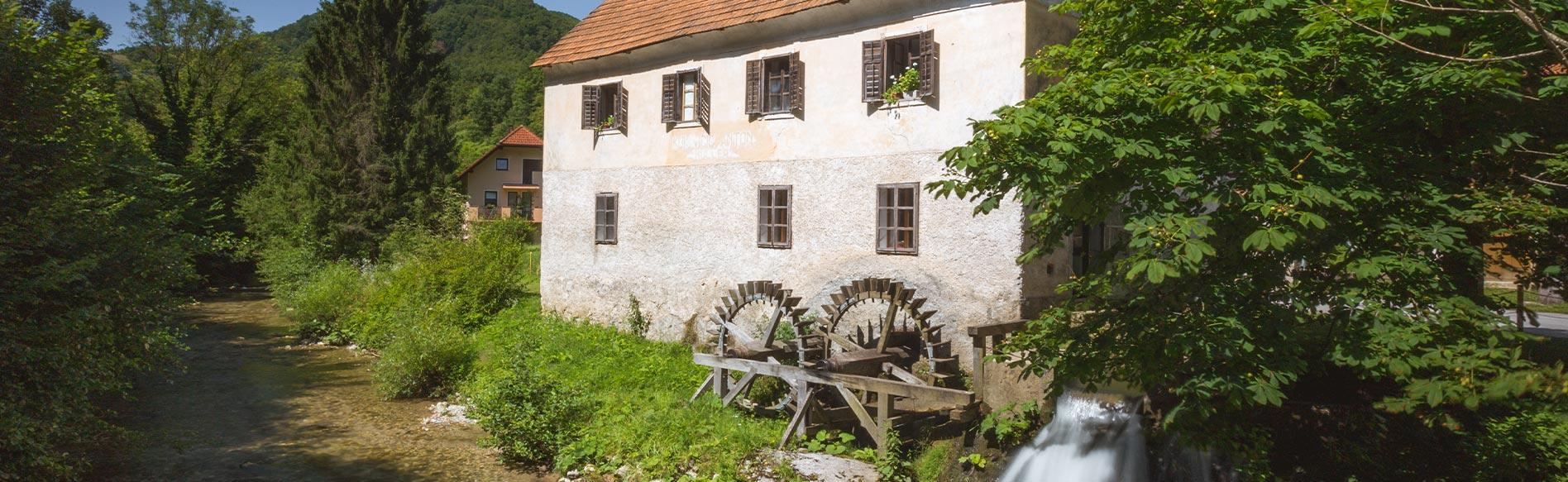
On the right bank of the Bistrica River, just off the main Podsreda–Kozje road, is one of the few remaining working mills from the mid-19th century. The Kukovičič mill (Podsreda 3a), today restored, is an ethnological cultural monument.
The house with the mill is a brick building with a longitudinal floor plan, set with a longer façade along the Bistrica riverbed. The once mighty building has now been restored in the lower part with the mill, while the entrance to the former residential part is still adorned with a remarkable wooden portal.
The mill operated almost continuously until the 1980s and its main boom was during the Second World War and the post-war period.
The mill has two working mill wheels for two types of flour.
The Kukovičič family restored the mill and today successfully combines the rich family tradition with modern production methods. They farm organically and, in addition to milling, also farm arable land and produce fruit crops.
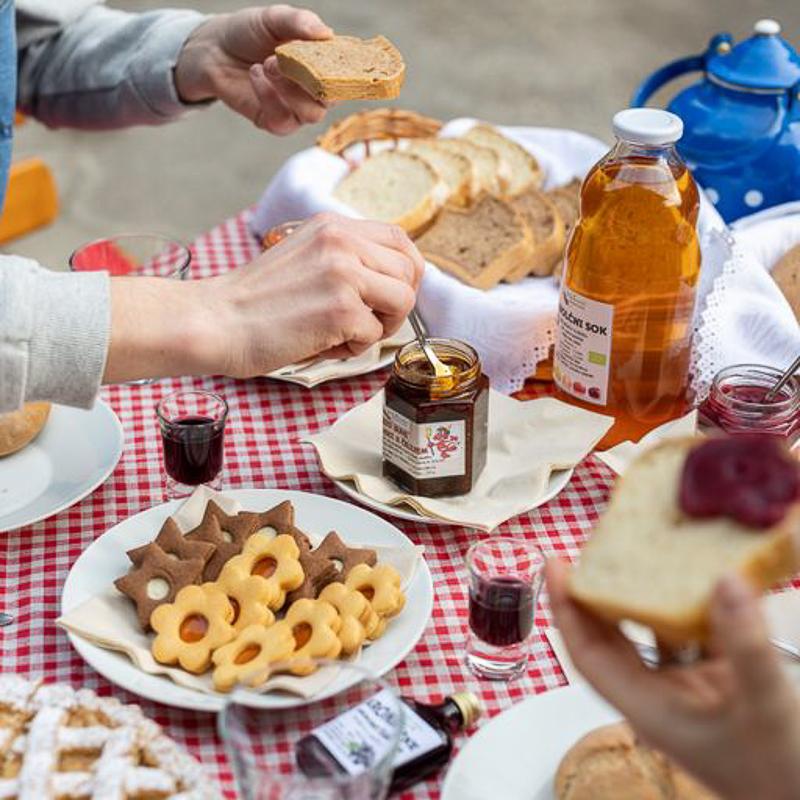
The operation of the old stone wheel mill can be admired by appointment. In the mill, you will learn about the whole process of grinding cereals, or the journey from grain to bread. You will also be able to taste and buy their organic produce and products, such as different types of homemade bread, spreads, juices, jams, flour, and other organic farm delicacies.
More information at: http://www.mlin-kukovicic.si/




Location
Explore other cultural attractions in Kozjansko Regional Park:
The medieval Podsreda market town developed under the eponymous Podsreda Castle and is situated on the right bank of the Bistrica River, along the regional road connecting Kozje and Bistrica ob Sotli. With its position, it belongs to the few areas with an extraordinary cultural landscape.
The Stations of the Cross from Podsreda lead to the Church of Our Lady of the Seven Sorrows on Stare gore above Podsreda, or the “Nearby Mountains” as they are popularly called.
The Javeršek homestead (Podsreda 93) is located about half a kilometre from the road connecting Podsreda and Bistrica ob Sotli. It is a secluded farm, which was given the name “v Loki” because of its location.
Kolar’s homestead is located in Trebče, next to a pond by the Podsreda–Bistrica ob Sotli road.
Svete gore is an ancient cult and pilgrimage centre on the hill of the same name above Bistrica ob Sotli (Zagaj).
At the top of the hill, at an altitude of 527m, there are five religious buildings.
On the right bank of the Bistrica River, just off the main Podsreda–Kozje road, is one of the few remaining working mills from the mid-19th century. The Kukovičič mill (Podsreda 3a), today restored, is an ethnological cultural monument.
Kozje is one of our oldest market towns, and the region in the central part of which it is located is named after it.
Pilštanj, situated on a low ridge above the village of Lesično, has one of the most picturesque views over the Bistrica valley and is today a cultural monument.