Menu

Menu
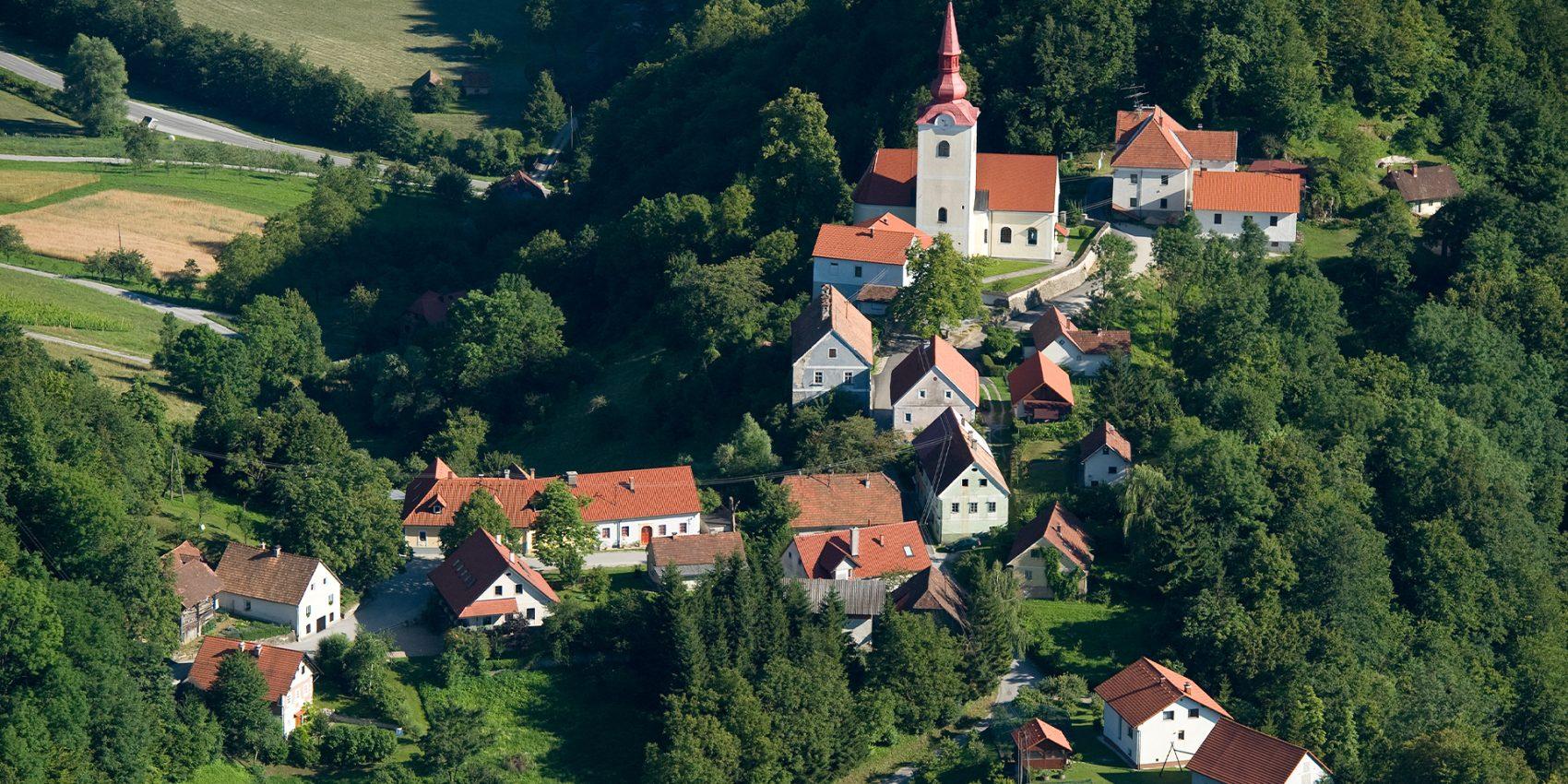
Pilštanj Market Town
Pilštanj, situated on a low ridge above the village of Lesično, has one of the most picturesque views over the Bistrica valley and is today a cultural monument. Pilštanj was first mentioned as a market town in 1404.
It was developed between the two peaks on which Peilenstein and Hartenstein castles once stood. Today, only the ruins of both castles remain.
According to legend, the only Slovenian saint, St. Emma, was born at Pilštanj Castle around 973.
Pilštanj also preserves a “pranger” pillory, of which very few have survived on Slovenian territory. Many of the houses in the town are decorated with carved stone portals, the remains of a once-functioning stonemason’s workshop.
You can also visit the parish church of St Michael with its fresco and statue of St Emma, the old school with a museum classroom, the village lime tree and fountain, Emma’s Grove, etc.
Just below the square is the rock solitary “Ajdovska žena” (Pagan Woman), which resembles a woman with a child in her arms. Legend has it that she was petrified when she cursed the sun.
The people of Pilštanj are proud of the cornel (Cornus mas), which grows on the surrounding hillsides and whose fruit – red berries – they like to process into jams and “cornel brandy”.
The Pilštanj footpath will take you through the market town and its surroundings and is also linked to the Lesično Educational Water Trail.
More information: https://td-pilstanj.si/


Location
Explore other cultural attractions in Kozjansko Regional Park:
The medieval Podsreda market town developed under the eponymous Podsreda Castle and is situated on the right bank of the Bistrica River, along the regional road connecting Kozje and Bistrica ob Sotli. With its position, it belongs to the few areas with an extraordinary cultural landscape.
The Stations of the Cross from Podsreda lead to the Church of Our Lady of the Seven Sorrows on Stare gore above Podsreda, or the “Nearby Mountains” as they are popularly called.
The Javeršek homestead (Podsreda 93) is located about half a kilometre from the road connecting Podsreda and Bistrica ob Sotli. It is a secluded farm, which was given the name “v Loki” because of its location.
Kolar’s homestead is located in Trebče, next to a pond by the Podsreda–Bistrica ob Sotli road.
Svete gore is an ancient cult and pilgrimage centre on the hill of the same name above Bistrica ob Sotli (Zagaj).
At the top of the hill, at an altitude of 527m, there are five religious buildings.
On the right bank of the Bistrica River, just off the main Podsreda–Kozje road, is one of the few remaining working mills from the mid-19th century. The Kukovičič mill (Podsreda 3a), today restored, is an ethnological cultural monument.
Kozje is one of our oldest market towns, and the region in the central part of which it is located is named after it.
Pilštanj, situated on a low ridge above the village of Lesično, has one of the most picturesque views over the Bistrica valley and is today a cultural monument.