MUSEUMS COLLECTIONS IN KOZJANSKO PARK
The Kozjansko park area prides itself on a number of museum collections and collections owned by private collectors. Some of them are designed to be viewed and show the creative mind of the former inhabitants of this area to visitors. You can visit the Javeršek homestead in Podsreda, a museum in Podčetrtek with lots of agricultural equipment, works of fine art created by teachers at Pilštanj, the ethnographic collection of Marija Sušnik, the majolka jars of Lea Babič and Travnik’s collection of antiques in Bizeljsko, the Pleteršnik homestead and Blacksmith’s museum in Pišece, My Mother’s Museum Classroom in Kozje, the Judiciary in Kozje, and the Krofl mill in Kozje.
Slovenian-Bavarian House, Podsreda
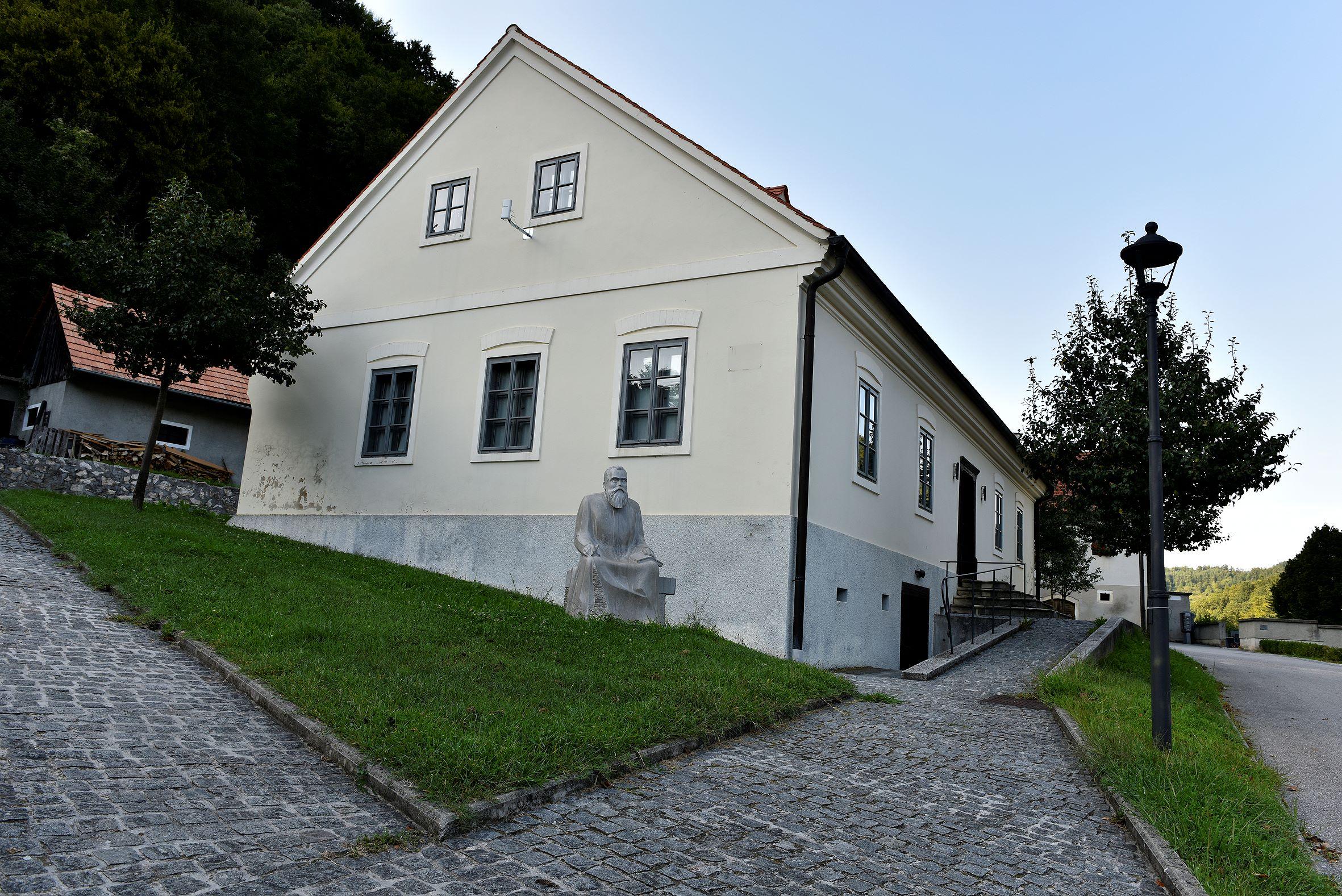
The former chaplaincy is located opposite the parish church and is a typical example of the market town architecture. The house is an ethnological cultural monument and was converted into the headquarters of the Slovenian-Bavarian Society after extensive renovation. When, after some time, it stopped operating, the name was still preserved. After its renovation it was granted a triple function: it became a showroom, a meeting place for members of the society, and a location for religious education and practice of a church choir.
There are two “apple” apartments in the building.
Contact: Kozjansko Park
Javeršek homestead, Podsreda 93
Marija Javeršek, the mother of Josip Broz Tito, was born here in 1864. In 1979, a part of the building was transformed into a museum, where you can see a lobby with black kitchen, a “house” and a “bedchamber”. Premises are equipped with original furniture and represent the living culture of that time.
Javeršek homestead can be reached on foot from the parking lot in Trebče (15 min). The path leads as over a picturesque wooden bridge across the Bistrica River, past a lime kiln where lime was once burned, and past Neža’s house where half a century ago a dressmaker named Neža used to live. From here, there is a nice view of the entrance to the gorge of the Bistrica River, which is one of the most beautiful gorges in eastern Slovenia.
Contact: Kozjansko Park

Museum classroom “My mother’s School”, Kozje
A fellow inhabitant of Kozjansko, Marjan Marinšek, set up a museum classroom originating from the times of the Kingdom of Yugoslavia in the very centre of the town. It shows an entire classroom with wooden benches and a school blackboard. You can also take a look at the first Slovenian textbooks from the 19th and 20th centuries, first arithmetic books, old school tablets, old school bags, pens and feathers, images used for demonstration and other items, and the original door of the former school in Kozje.
More information: https://www.kozje.si/objava/194205

Krofl Mill, Kozje
At the end of the stream of Bister graben stands the Krofl homestead with two outbuildings. A house with a former mill and outbuilding is crammed onto a narrow shelf between the stream and an almost overhanging rock of the steep hill of Kozjek. Once it was the home of a miller, tinsmith, carpenter and industrial worker from the nearby industrial facility. There was also a saw mill here up to the first half of the 19th century.
The mill was renovated during 1998 and 2000. A permanent museum collection has been set up in the former residential area, with exhibitions hosted there from time to time.
More information: https://www.facebook.com/kroflnovmlin/

Judiciary in Kozje, Kozje
The court and the prison moved to the Municipal Home in 1932. An exhibition under the name Judiciary in Kozje occupies the former prison cells. In the individual cells, the work of the court in Kozje, office remnants of the local court in Kozje, various material from the court and notary, and the last showroom represents a prison cell from the time when the prison was still operating.
More information: https://www.kozje.si/objava/202591

Pleteršnik homestead, Pišece
Maks Pleteršnik (1840–1923), a great Slovenian linguist, was born and buried in Pišece. He became part of the history of the Slovenian people with his most important work – the Slovenian-German Dictionary. He collected and edited material for 20 years. A memorial collection has been set up in his place of birth. Three rooms showcase the furniture and personal items of Maks Pleteršnik, most notably his books. The Society of the Pleteršnik homestead looks after the homestead today and also organises Pleteršnik Days.
More information: http://www.pletersnikova-domacija.si

Ethnographic collection of Marija Sušnik, Bizeljsko
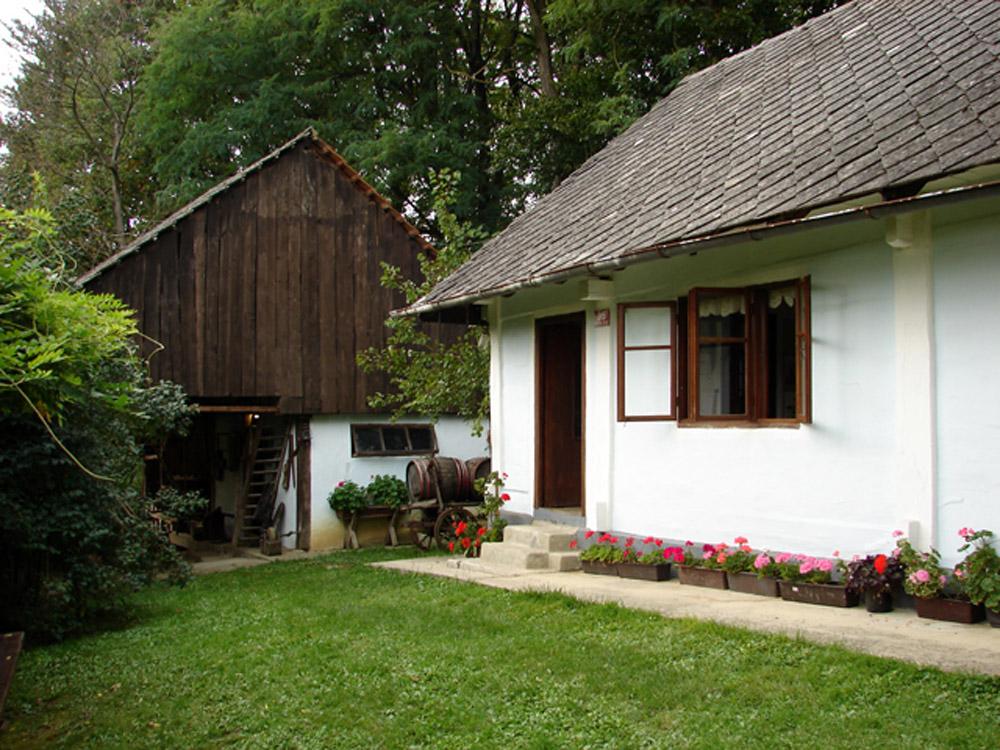
Old Fil homestead is preserved in the nicest part of the wine route primarily connecting viticultural areas, and which houses the collection of Marija Sušnik with around 2000 items. There is a permanent exhibition in the house and the outbuilding. Visitors can take a look at the agricultural equipment, containers, tools, books and photographs with an emphasis on viticulture. The items were donated by many of the inhabitants of Bizeljsko.
More information: https://www.bizeljsko.si/stalna-etnografska-zbirka-marije-sunik/