

HABITATS
-

- KONICA MINOLTA DIGITAL CAMERA
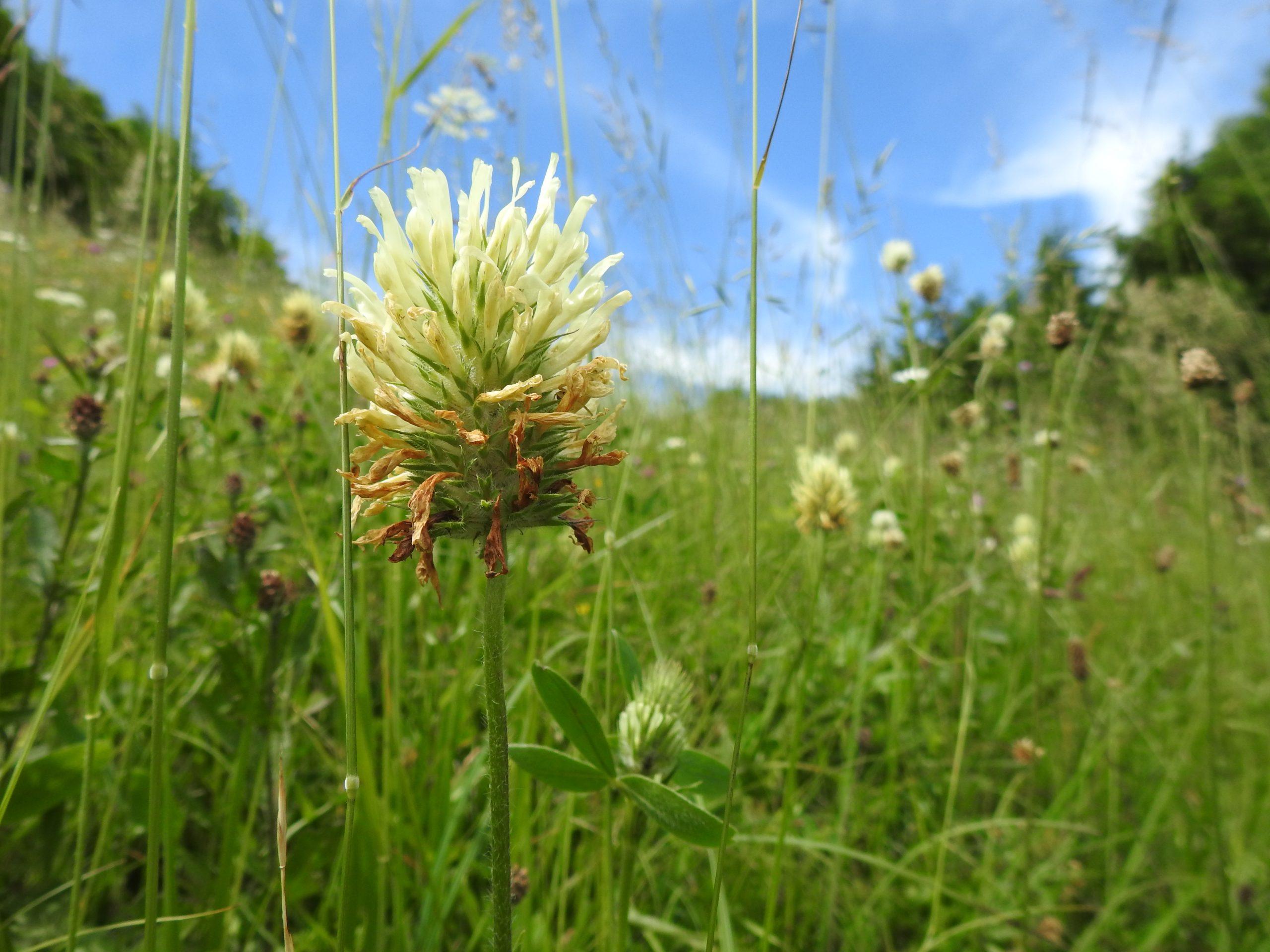
The highest, pre-alpine parts of Kozjansko park – Vetrnik, Oslica, Bohor – are at a height of 600m to 1000m. They are home to hill dry grasslands with an exceptional biodiversity. They are the result of sustainable farming, traditional use (predominantly one-time mowing and autumn grazing), and are a real treasure trove of living nature, changing their appearance weekly during the season. Individual trees or scrublands and hedgerows contribute to the additional diversity.
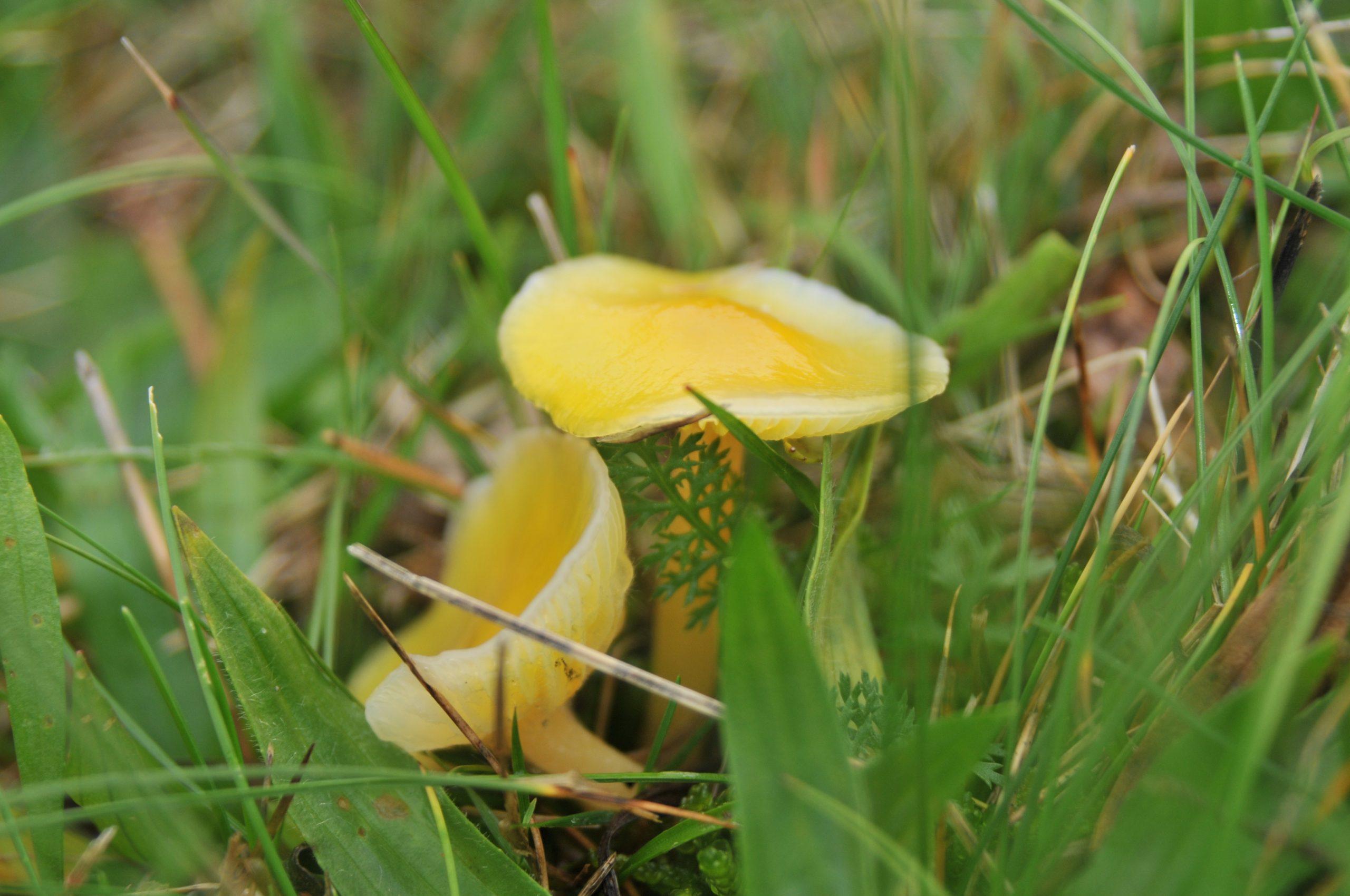
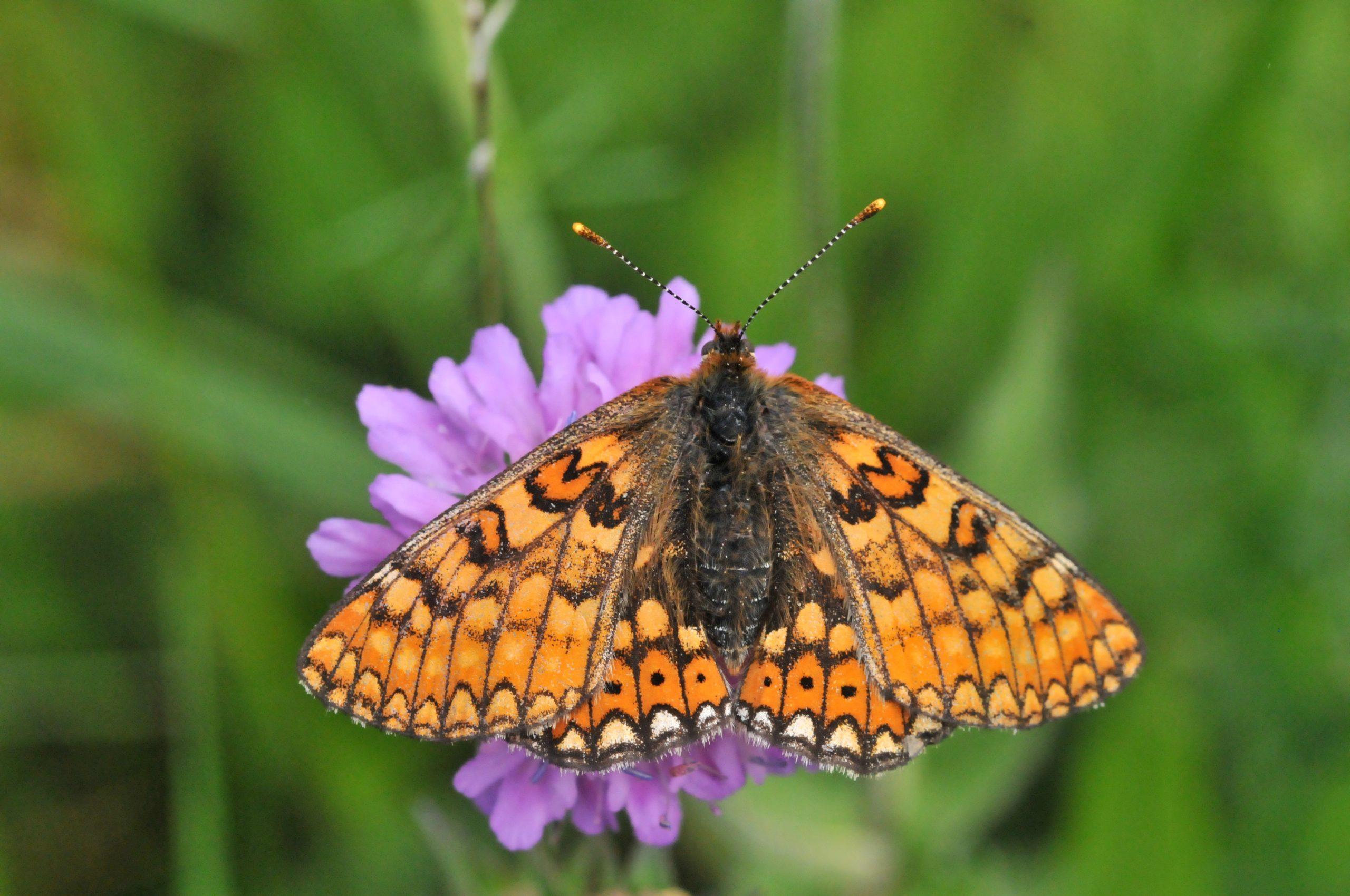
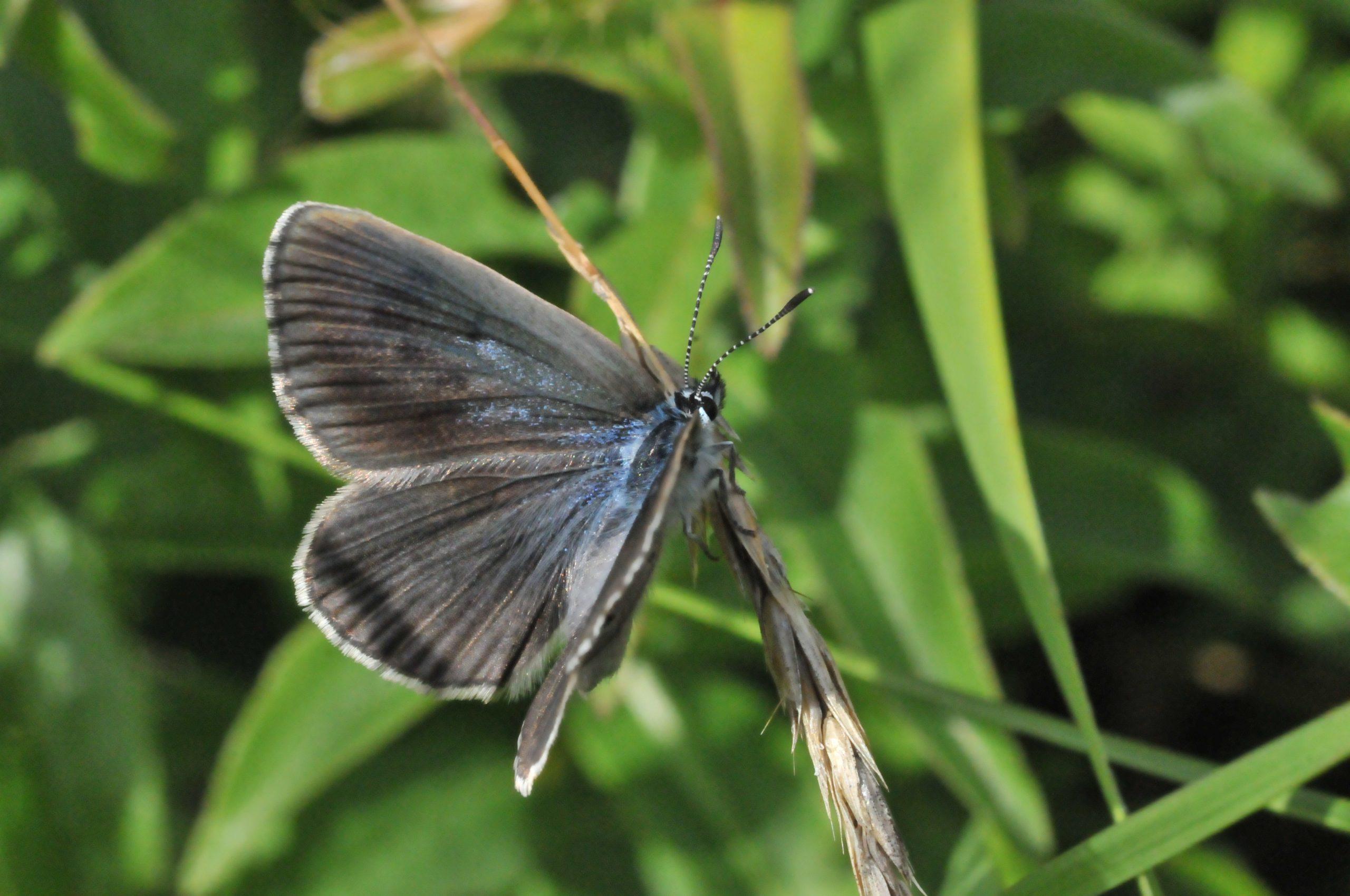
Dry grasslands are classified into habitat types of natural and secondary dry grasslands. From Annex I of the European Habitats Directive, two Natura 2000 habitat types 6210 (*) – Semi-natural dry grassland and scrubland on carbonate soils (Festuco-Brometalia) (* important orchid grassland) and 6510 – Extensively managed lowland grassland (Alopecurus pratensis, Sanguisorba officinalis) dominate in our area. The meadows are home to various species of orchids (green-winged orchid, marsh orchids, fragrant orchid, frog orchid, round headed orchid, pyramidal orchid, etc.), waxcaps, and butterflies. In a single walk through a meadow on Vetrnik, one can find as many as 17 species of waxcap fungi, which indicates the importance of protecting nature on national level. Other plants that attract attention include the Carniolan lily (Lilium carniolicum), the common wind flower (Pulsatilla nigricans), the wolf’s bane (Arnica montana), as well as the unprotected Hungarian clover (Trifolium pannonicum) or the scabious (Scabiosa hladnikiana). The very rareross gentian (Gentiana cruciata) is host to the protected butterfly species of Alcon blue butterfly (Phengaris alcon). Among the more than one thousand butterfly species, there are endangered marsh fritillaries (Euphydryas aurinia).
Due to the colourful flowers, meadows shine in their full glory from May to August, while in October, a variety gilled fungi can be found here. To see this treasure trove of nature, head to the Travnik Educational Trail, which runs around the Vetrnik peak (708m) in the village of the same name, Vetrnik. For more information, see 7.3 Travnik – Vetrnik Educational Trail.








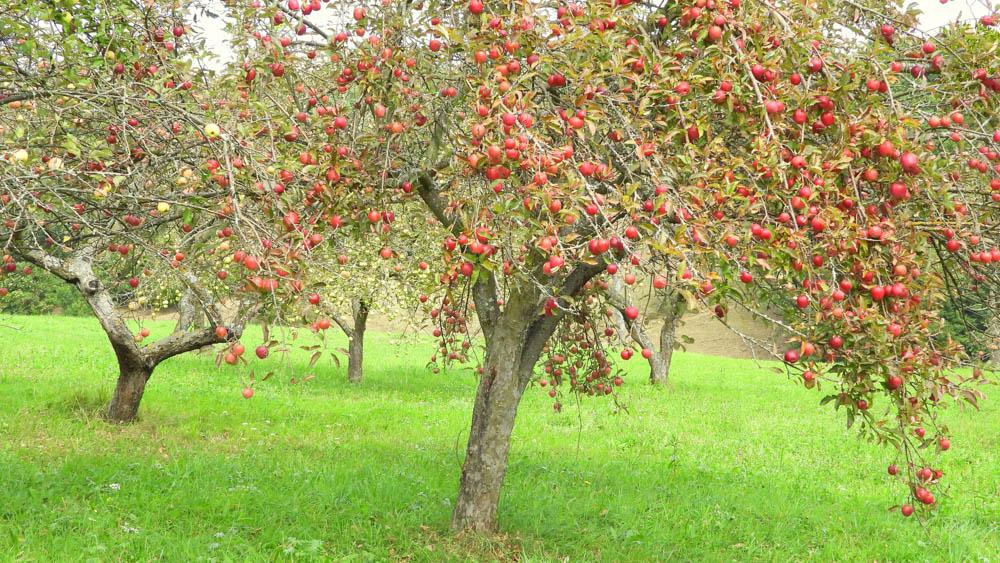
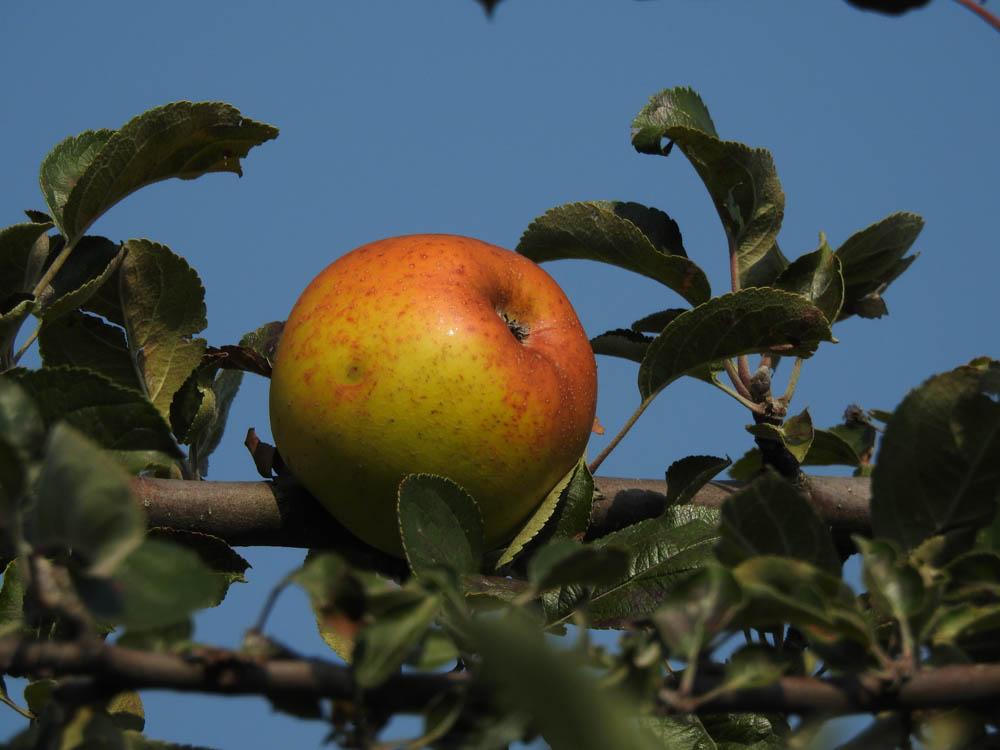
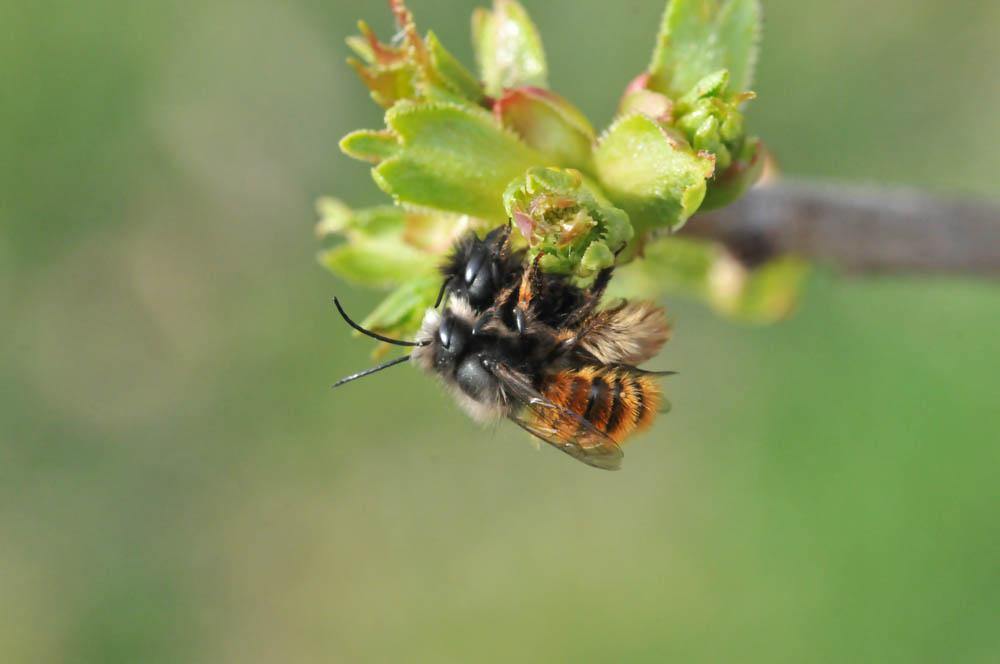
Meadow orchards belong to the habitat type of agricultural landscape or agrarian habitat type, which feature extensive use of agricultural surfaces maintaining traditional agricultural landscape and essentially contributing to preserving the biodiversity. This kind of habitat type is also one of the most endangered, which is due to changes in the use of agricultural land, a decrease in agricultural production and the consequent overgrowing, economic changes, as well as changes in the social structure of the owners. Meadow orchards provide breeding habitat for some of Europe’s threatened bird species, such as the Eurasian wryneck (Jynx torquilla), common redstart (Phoenicurus phoenicurus), scops owl (Otus scops), and red-backed shrike (Lanius collurio). This is why the area, with its preserved meadow orchards, is included in the European Natura 2000 network. The presence of these bird species is also due to the large number of different insect species (ants, grasshoppers, butterflies, beetles, etc.) that live here. In Kozjansko Park, we pay a lot of attention to solitary bees, such as the red mason bee and European orchard bee (Osmia rufa, Osmia cornuta), which are important pollinators, and we also provide insect dwellings to help them. Similar help is also being provided for ladybirds and earwigs, which also enables the owner to be able to pick abundant and healthy food crops in the autumn. Meadow orchards are orchards with tall native and traditional fruit trees, under which the grass is mown and livestock are put out to pasture. Fruit species in such orchards include apples, pears, plums, apricots, cherries, walnuts, hazelnut, and European elderberry. Tall species are more resistant to diseases and pests, which means that no phytopharmaceutical agents are required. Meadow orchards with traditional fruit varieties are a guarantee for an excellent gene bank of numerous not yet recorded varieties. Due to the increase in environment-friendly food production, meadow orchards are one of the most successful good environmental practices.







More than 50% of the protected area is covered by forests, mainly various associations of beech forests, which are replacing oak and other thermophilous groups in the southern slopes. The holly tree (Ilex aquifolium), European yew (Taxus baccata), Blagaj daphne (Daphne blagayana, Daphne cneorum), as well as mouse thorn and butcher’s-broom (Ruscus hypoglossum, Ruscus aculeatus) are forest plant species that should be mentioned in terms of importance to nature conservation. Among the forest species of orchids, there are several species of helleborines (Epipactis sp.), cephs (Cephalantera sp.), and even the beautiful lady’s-slipper orchid (Cypripedium calceolus), but the most abundant are the bird’s-nest orchids (Neottia nidus-avis). The area is also known in other regions for its healthy fir forests and high-quality maple wood. In the forest undergrowth, groups of Christmas roses, green hellebore, and black hellebore (Helleborus niger, Helleborus odorus, Helleborus atrorubens), winter aconite (Eranthis hyemalis), and snowdrop varieties (Galanthus nivalis, Leucojum vernum) grow. Among mammals, the presence of the chamois (Rupicarpa rupicarpa) and the dormouse (Glis glis) is noteworthy. Two bird surveys have shown that the area is densely populated by middle spotted woodpecker (Dendrocopus medius), Ural owl (Strix uralensis), as well as by collared flycatcher (Ficedula albicollis) and black stork (Ciconia nigra). Numerous protected species of beetles, such as the stag beetle (Lucanus cervus), beech beetle and Rosalia longicorn (Morimus funereus, Rosalia alpina) are present – this is proof of the level of forest preservation and adequate percentage of annual dry wood mass. Bushes and herbs growing near the forests are a convenient living space for numerous butterflies – Jersey tiger moths (Callimorpha quadripunctaria), the clouded Apollo (Parnassius mnemosyne), and the southern festoon (Zerynthia polyxena).


Wet grasslands are quite rare, found mainly outside the protected area, in the Natura 2000 site Dobrava-Jovsi. Dobrava is characterised by a lowland floodplain forest of the pedunculate oak (Quercus robur) and common hornbeam (Carpinus betulus), while on the edge of the Brežice plain, along the Sotla River, in Jovsi, there are wet floodplain grasslands. In the meadows, the orchid of the species (Orchis palustris), the adder’s-tongue (Ophioglossum vulgatum), the large copper (Lycaena dispar), and the large marsh grasshopper (Stethophyma grossum) can be observed. The increasingly hot summers are also leading to less and less water in Jovsi. Meadows are flooded for short periods, some water bodies dry out, and some species are therefore in decline. These include various amphibian species, such as the Italian crested newt (Triturus carnifex) and the moor frog (Rana arvalis), while the European fire-bellied toad (Bombina bombina) is probably sadly extinct. Changes in the cultural landscape are also contributing to the threat to species, with some land becoming overgrown and other areas undergoing more intensive agriculture. This also puts some grassland-nesting birds at risk, including the corn crake (Crex crex), the whinchat (Saxicola rubetra) and the common grasshopper warbler (Locustella naevia).


KOZJANSKO REGIONAL PARK Accessibility Statement
We firmly believe that the internet should be available and accessible to anyone, and are committed to providing a website that is accessible to the widest possible audience, regardless of circumstance and ability.
To fulfill this, we aim to adhere as strictly as possible to the World Wide Web Consortium’s (W3C) Web Content Accessibility Guidelines 2.1 (WCAG 2.1) at the AA level. These guidelines explain how to make web content accessible to people with a wide array of disabilities. Complying with those guidelines helps us ensure that the website is accessible to all people: blind people, people with motor impairments, visual impairment, cognitive disabilities, and more.
This website utilizes various technologies that are meant to make it as accessible as possible at all times. We utilize an accessibility interface that allows persons with specific disabilities to adjust the website’s UI (user interface) and design it to their personal needs.
Additionally, the website utilizes an AI-based application that runs in the background and optimizes its accessibility level constantly. This application remediates the website’s HTML, adapts Its functionality and behavior for screen-readers used by the blind users, and for keyboard functions used by individuals with motor impairments.
If you’ve found a malfunction or have ideas for improvement, we’ll be happy to hear from you. You can reach out to the website’s operators by using the following email
Our website implements the ARIA attributes (Accessible Rich Internet Applications) technique, alongside various different behavioral changes, to ensure blind users visiting with screen-readers are able to read, comprehend, and enjoy the website’s functions. As soon as a user with a screen-reader enters your site, they immediately receive a prompt to enter the Screen-Reader Profile so they can browse and operate your site effectively. Here’s how our website covers some of the most important screen-reader requirements, alongside console screenshots of code examples:
Screen-reader optimization: we run a background process that learns the website’s components from top to bottom, to ensure ongoing compliance even when updating the website. In this process, we provide screen-readers with meaningful data using the ARIA set of attributes. For example, we provide accurate form labels; descriptions for actionable icons (social media icons, search icons, cart icons, etc.); validation guidance for form inputs; element roles such as buttons, menus, modal dialogues (popups), and others. Additionally, the background process scans all the website’s images and provides an accurate and meaningful image-object-recognition-based description as an ALT (alternate text) tag for images that are not described. It will also extract texts that are embedded within the image, using an OCR (optical character recognition) technology. To turn on screen-reader adjustments at any time, users need only to press the Alt+1 keyboard combination. Screen-reader users also get automatic announcements to turn the Screen-reader mode on as soon as they enter the website.
These adjustments are compatible with all popular screen readers, including JAWS and NVDA.
Keyboard navigation optimization: The background process also adjusts the website’s HTML, and adds various behaviors using JavaScript code to make the website operable by the keyboard. This includes the ability to navigate the website using the Tab and Shift+Tab keys, operate dropdowns with the arrow keys, close them with Esc, trigger buttons and links using the Enter key, navigate between radio and checkbox elements using the arrow keys, and fill them in with the Spacebar or Enter key.Additionally, keyboard users will find quick-navigation and content-skip menus, available at any time by clicking Alt+1, or as the first elements of the site while navigating with the keyboard. The background process also handles triggered popups by moving the keyboard focus towards them as soon as they appear, and not allow the focus drift outside it.
Users can also use shortcuts such as “M” (menus), “H” (headings), “F” (forms), “B” (buttons), and “G” (graphics) to jump to specific elements.
We aim to support the widest array of browsers and assistive technologies as possible, so our users can choose the best fitting tools for them, with as few limitations as possible. Therefore, we have worked very hard to be able to support all major systems that comprise over 95% of the user market share including Google Chrome, Mozilla Firefox, Apple Safari, Opera and Microsoft Edge, JAWS and NVDA (screen readers).
Despite our very best efforts to allow anybody to adjust the website to their needs. There may still be pages or sections that are not fully accessible, are in the process of becoming accessible, or are lacking an adequate technological solution to make them accessible. Still, we are continually improving our accessibility, adding, updating and improving its options and features, and developing and adopting new technologies. All this is meant to reach the optimal level of accessibility, following technological advancements. For any assistance, please reach out to